Back to shelf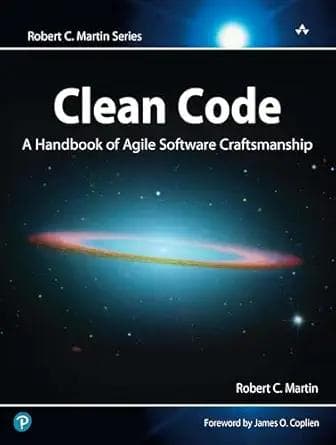
CompletedSoftware EngineeringProgrammingClean Code
Clean Code
by Robert C. Martin
A timeless software engineering classic that teaches how to write clean, maintainable, and readable code. The book focuses on coding principles, refactoring techniques, naming conventions, functions, objects, testing, and professional software craftsmanship.
“
From the book
A timeless software engineering classic that teaches how to write clean, maintainable, and readable code. The book focuses on coding principles, refactoring techniques, naming conventions, functions, objects, testing, and professional software craftsmanship.
Catalog Card
Pages464
PublisherPrentice Hall
Checked out
Nov 2025
Returned
Feb 2026
Software EngineeringProgrammingClean Code
Dog-eared pages
Key Takeaways
01
Meaningful names improve readability more than comments.
02
Functions should be small and have only one responsibility.
03
Code is read more often than it is written.
— torn from the notebook —
One of the biggest lessons from this book is that writing code for humans is more important than writing code only for machines.
The chapter on naming completely changed the way I think about variables and functions. Clear names reduce the need for comments.
Small functions with a single responsibility make debugging much easier and improve overall project structure.
Refactoring should not be treated as a separate task but as part of everyday development.
Unit testing is not just about finding bugs. It also helps design better APIs and cleaner code.
This book reinforced the idea that professional developers leave codebases in a better state than they found them.
Where to find it
More like this
Checkout Slip
recommended titles
— thank you for reading —